HVAC Leak Check Catches Hidden Problem in Victoria
Small leaks are sneaky. Your system might still be running, temps might feel okay, but something is just a little off. That's usually when people call us - not because the system quit, but because it stopped feeling right.
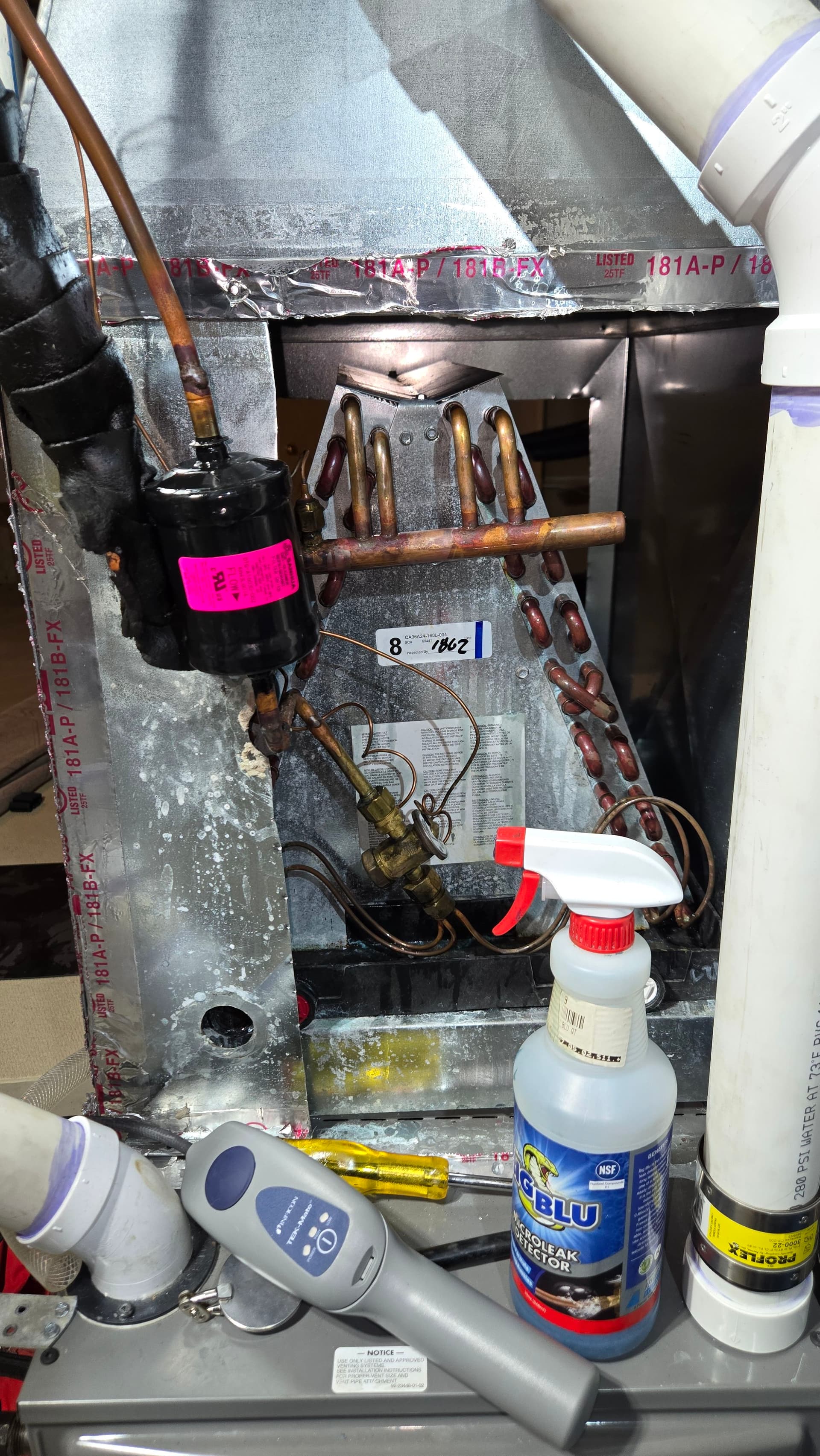
We were out in Victoria recently for exactly that kind of call. A suspected HVAC leak. The goal was simple: find it before it turns into something bigger. That means pulling back the panels, getting into the coil section, and doing a proper leak check with the right tools - not just guessing.
We use a refrigerant leak detector to pinpoint where the system is losing charge. That handheld detector is sensitive enough to catch leaks that would otherwise go completely unnoticed. Pair that with a microleak detector solution on the fittings and coil, and you've got a solid process for finding even the smallest problem areas. It's methodical work, but that's how you catch things early.
Here's why this matters. A slow refrigerant leak doesn't just hurt comfort - it forces your system to work harder to hit the same temperatures. That means higher energy bills and more wear on components that are already doing too much. Catching a small leak now is almost always cheaper than dealing with a compressor failure or coil replacement later.
Furnace and HVAC systems that get checked regularly just run better. If your system has been struggling to keep up or something feels off, a leak check is a smart first step.